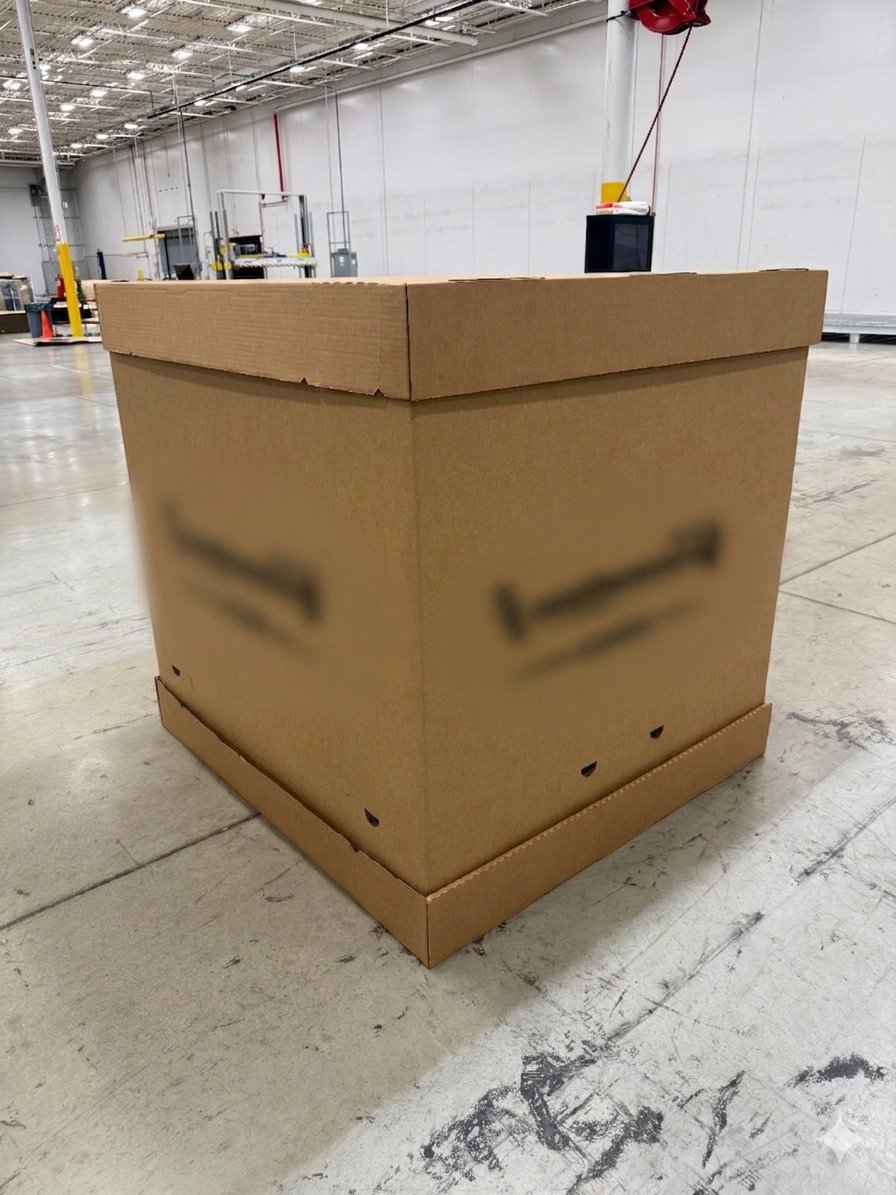
Reengineering a bulk unit pack
How JackPack removed manual cutting required at line, held spec under load, and fit hundreds more units per pallet.
Read more →
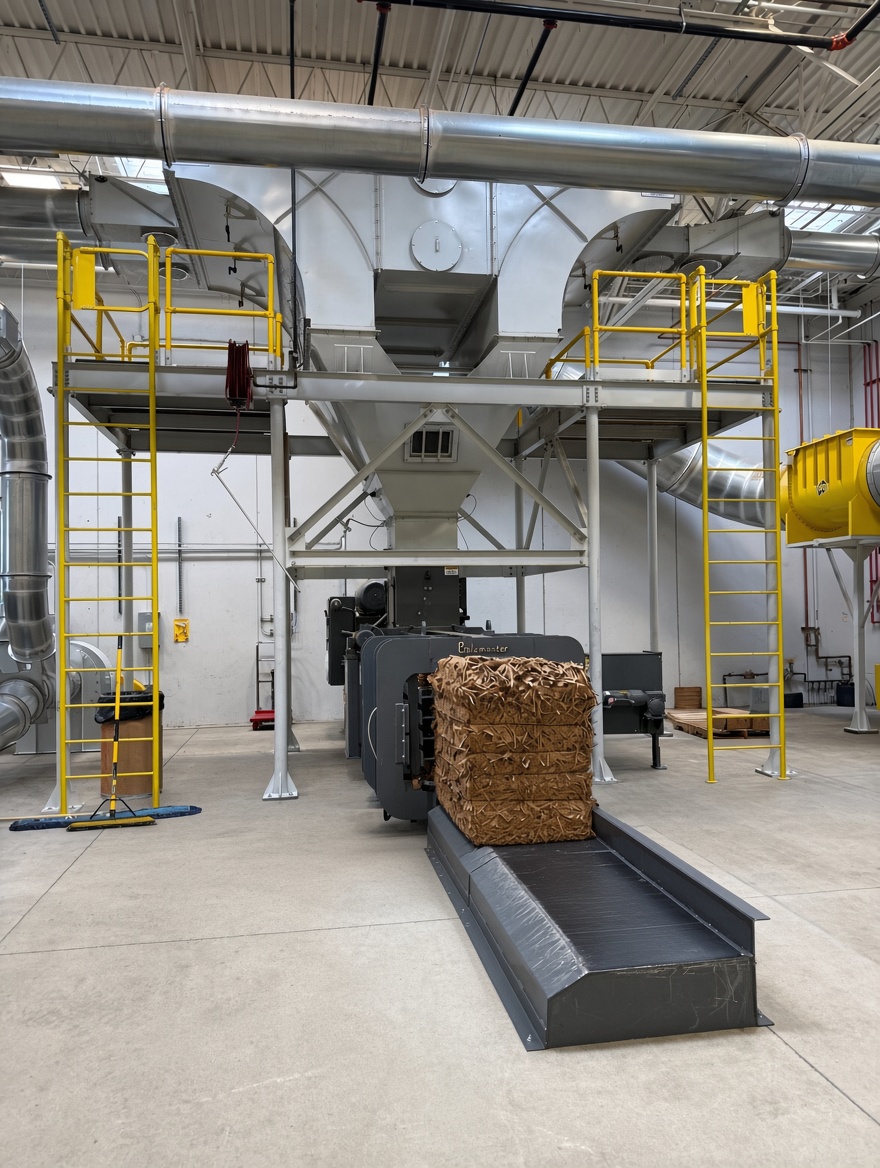
Cutting corrugated at scale creates a lot of trim and fine paper dust. Rather than let it settle on the floor and in the air, NorthGate runs a fully automated system that captures every scrap at the source, scrubs the air clean, and bales the recovered fiber for recycling — all without stopping production.
Walk the JackPack floor and the first thing you notice is what you don't see: no drifts of cardboard scrap piling up beside the die-cutters, no haze of paper dust in the air. That's by design. Overhead, a network of steel ductwork runs the length of the plant, quietly pulling waste away from every cutting line the moment it's created.
Large-format die-cutting and converting generate two byproducts at once: bulky corrugated trim, and the fine airborne dust that comes with cutting paperboard all day. Left unmanaged, both add up fast — trim clutters the work area and creates trip and fire hazards, while airborne paper dust affects air quality and settles on everything in the building.
Handling it by hand — sweeping, carting, and hauling scrap — is slow, labor-intensive, and never really keeps up. We wanted a system that kept the plant clean automatically and turned our waste into something recoverable.
The system runs as one continuous, closed loop across three automated stages:
High-volume pneumatic ductwork vacuums corrugated trim and dust straight off the cutting lines, before either can reach the floor or the air.
A Camfil Gold Series dust collector separates fine paper dust through self-cleaning cartridge filters, returning clean air to the plant.
A Balemaster auto-tie baler compresses the recovered corrugated into dense, wire-tied bales ready to ship back to the mill.
The captured material is separated by an overhead cyclone and drops down into the baler, while the dust-laden air continues on to the collector. It's the kind of high-tech, hands-off equipment that lets the team focus on making great packaging instead of chasing scrap.
At the center of the air-quality side is a Camfil Gold Series cartridge dust collector. Air pulled from the plant passes through banks of vertically mounted filter cartridges that trap fine paper dust; periodic pulses of compressed air self-clean the cartridges from the inside, knocking the collected dust down into hoppers below so the system can run continuously. The result is filtration efficient enough to meet — and exceed — OSHA factory air-quality standards.

The payoff shows up everywhere — in cleaner air, a safer floor, and a smaller environmental footprint:
Clean air and a clean floor aren't extras — they're how we take care of our people and our product. This system does both, automatically, every shift.
— NorthGate Operations
It's a straightforward reflection of how we like to work: invest in the right equipment, take care of the team, and waste nothing. Want to see it in person? Ask about a plant tour when you reach out.